MAY – Greener gardening

So much for April showers, we have had now one of the driest Aprils on record in nearly 100 years. The sun is growing stronger, but we have been experiencing some really cold nights so don’t get too carried away planting out young seedlings – it’s hard to not do so when everything is elbowing each other for space in the greenhouse. Just harden off anything used to the cosy embrace of the indoors or glasshouse by gradually exposing them to the outdoor temperatures.

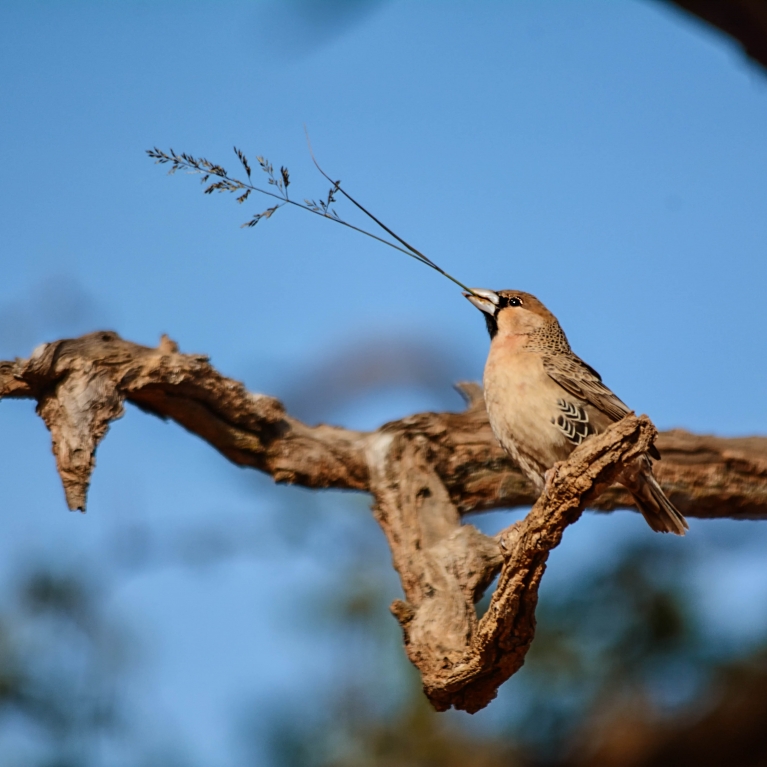
Birdsong is in full swing and as supplies of native nuts and seeds dwindle, make sure you keep these wonderful garden visitors well fed and watered. The local sparrow population in my garden are doing a great job in keeping the emerging aphid population down so I will do what l can to keep these pest control experts sharing my garden. May can be a hectic month but there are many ways to save yourself time so you can spend more of it admiring the plants and wildlife as you eat your fresh salad leaf salad sprinkled with the bright star shaped flowers of your borage flowers.

Mulch, mulch, mulch. Save time weeding and watering. There are many different types of mulch from seaweed to straw, grass clippings to bark chip. Each have different merits, but avoid peat based manure/ compost. Best is home-made compost with the smallest environmental footprint, or whatever is closes at hand for you, and unless the ground is really compacted it can just be left in a thick layer on top of the beds. Mulching feeds all sort of fungi as it breaks down and locks carbon in into the soil – it’s benefits really can’t be overstated, aim for a depth of at least 5cm. It’s a great way to attract more worms which will thrive in the cool, dark conditions.

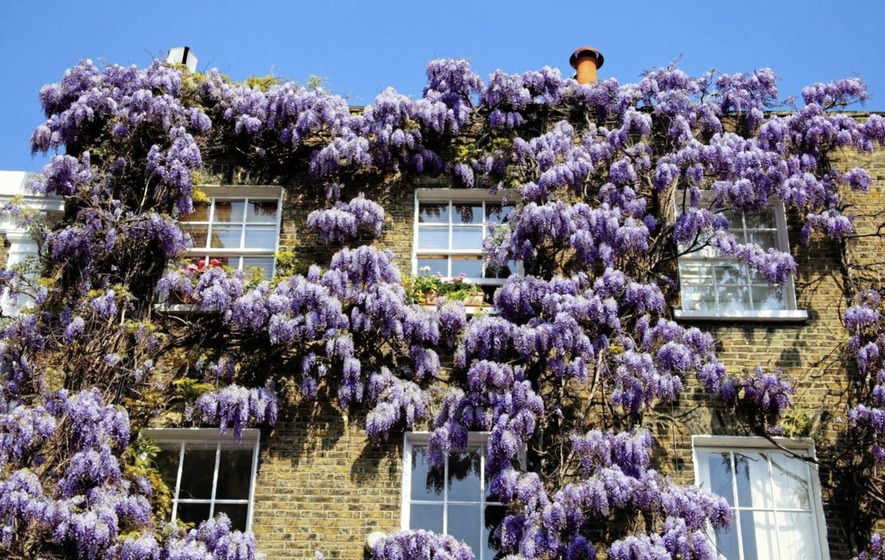
There are some beautiful plants to enjoy this time of year. There are some beautiful, head-turning  wisterias in Bovey, lovingly trained on walls. These plants are real ‘doers’ – loved by pollinators; a musky sweet scent from the dripping pea-like flowers; often used a shelter by birds and insects. Their twining stems can require a little encouragement to train them in a manageable way but if you have the space and have a host tree or hedge you can send them spiralling upwards and they’ll reward their freedom with a few less blooms, but a real rambley wildlife habitat for all sorts of creatures. One of my children always used to call them ‘Misteria’s’ which I think is a much more apt name for these symbolic plants.

Elsewhere in the garden, I’m ensuring my water-butts are clean and leak-free to collect this precious commodity – planning where I can add some more water storage. I’m directly sowing French beans and sugar snap beans in my vegetable garden – seedlings of these can be damaged by slugs so after sowing you can cover with half a plastic bottle to act as a mini-cloche and slug/snail deterrent. Straw will be tucked under strawberries in next week or 2, this will help conserve the moisture and also help them from being spoiled by rain-splashed soil and slugs. May day is an important ‘workers holiday’ but its more ancient roots stem from the festival of Beltain, one of the great fire festivals when bonfires were lit on hill tops and communities gathered around all night to see the summer in. This time of year, all life is on the move, and it’s a time for collective thinking of how to influence the world around us in subtle but profound ways……. So why not start by planting a tree or some wild seeds! The Bovey & Heathfield Climate Emergency group are giving away trees and seeds in partnership with Devon Wildlife trust on Sat May 22nd from 9.30 @ the new Community Centre in Bovey – Please wear facemasks and observe social distancing. Or contact dartmoorgardens@hotmail.com or cebh@boveytracey.gov.uk with any garden related queries
APRIL 2021. Climate friendly gardening

We have enjoyed some wonderful warm days already this year and the late spring flowers are everywhere to be seen. Yellow dominates, its brightness attracting early pollinators with the lower light levels – wands of forsythia in peoples gardens festooned with its cups of an almost offensive brightness; star-like celandines littering verges and wood-land edges; you may catch the last of the wild daffodils at Dunsford nature reserve, one of England’s largest gathering of these nectar rich plants. It was only 50 years ago that daffodils here were becoming a rare sight due to picking by unthinking visitors but changes in legislation and work by Devon Wildlife Trust now ensure this a spectacle enjoyed by humans and a boon for wildlife.

It is easy to get carried away in the garden but keep the horticultural fleece close this month. Seed sowing can start in earnest – a sunnyish window-sill will suffice, although a greenhouse is an investment that comes highly recommended. I love to escape into that warm, dry shelter; hearing the rain drum down on the roof wishing I had more space as I cram more seeds onto every horizontal surface. A visiting mouse has been causing havoc to my efforts but now with sprigs of holly covering the trays and an additional protection of cloches, seeds are well on their way. A long-time gardener friend recommended hanging shelves as an effective ways to deter these furry visitors! Crops like Lettuce germinate quickly even in the cooler temperatures and can be planted out anytime. The tight-heads of Cos lettuce can be cropped a few leaves at a time from the outer layers. If you are feeding a family, I love the ‘Red Iceberg’, lovely contrasting red and white leaves and stands well for a long time.  As with a lot of these quicker germinating vegetables, the trick is to sow every couple of weeks – A glut of lettuce, and lettuce soup can be a hard sell to my kids!

Raised beds can be a great option for growing fruit, vegetable or how about herbs? Herbs will do especially well in a sunny spot with the extra drainage from the raised soil level. It can be an effective  way of losing some old rubble in your garden by building raised beds, utilising the rubble at the base. I love to try and get some changes in level to add some interest to a flat plot. The beds can be made from various materials – wood, stone or bricks.  There are a lot of recycled plastic options on the market now, with pros and cons of each choice.  Herb beds are ideally situated as near to the kitchen as possible and can be some of the most useful of all eco- garden plants. For visual appeal and a favourite with the bees is Borage, a reliable self-seeder that renews itself year-on-year. Chives are an early starter and have already been harvested a couple of times raw in salads – I’ll leave some for their lovely nectar rich flowers and cut them to ground level when they’ve gone to seed for a continuous crop through to till early Autumn.

As new growth appears on fruit trees and shrubs, it is a good time to give them a feed. Home-produced compost is ideal but if not loose manure from a local farm is better than pre-plastic-packed manure from garden centres. The organic fertilisers from chicken or sheep manure I find effective, just sprinkle liberally round base of plants and water them well if no rain due. I often use organic insect ‘Frass’, very apt in this climate of ‘vaccines’, a by-product of meal-worm castings, it encourages plants to trigger their natural immunity to insect attacks as well being chock-full of nutrients. It is worth noting that improving soil has an immediate benefit of locking up and storing atmospheric carbon thus helping reduce build-up of greenhouse gases.

Your garden in December

This time of year can produce a real juxtaposition of days – Crisp, clear air and striking blue skies, a stillness in the cold, carrying sounds and scents for miles. Waking up the next day to face whipping rains, shoulder hunching winds and a general muddiness to the rotting leaves gathering. It can feel like the ground will never dry out and worries of plants needing watering seem an age ago.

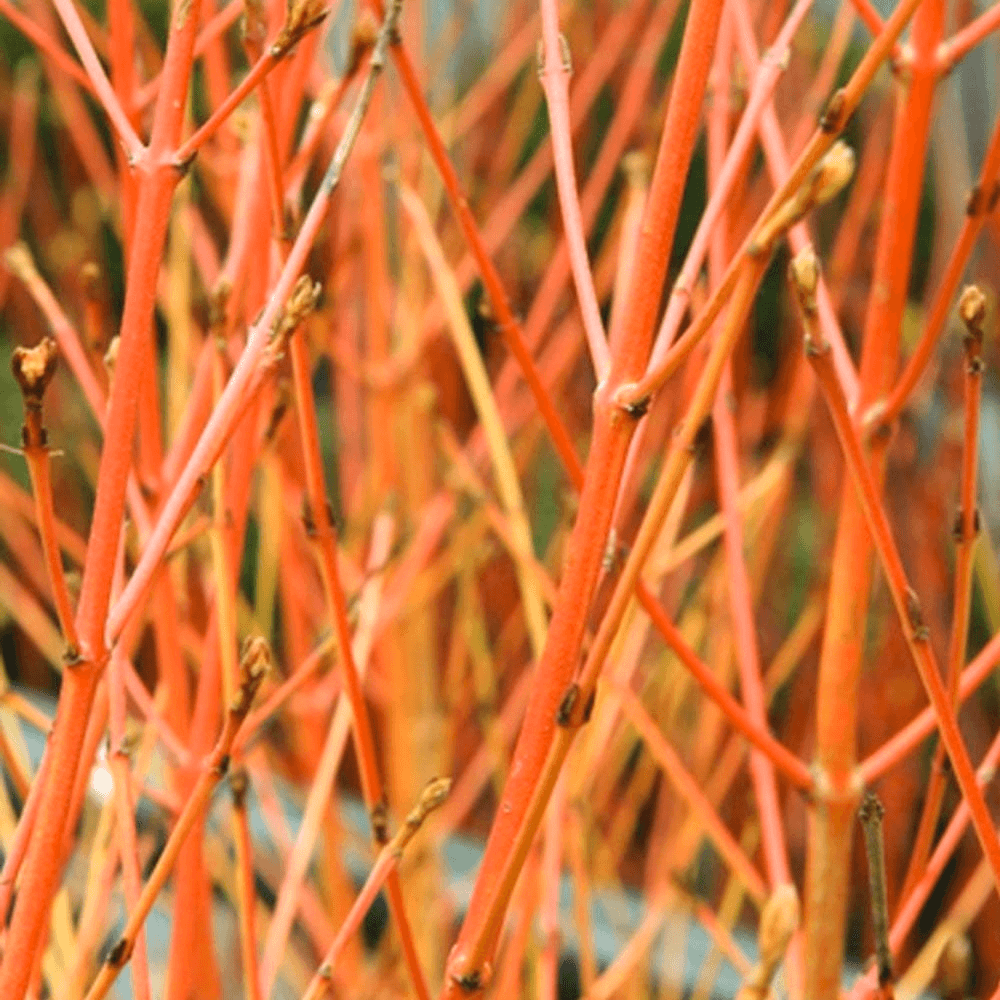
The nature of gardening means we are often in tune with the weather, noticing extending growing seasons and observing how various plants are coping with changes. We have experienced an increased frequency of extreme weather conditions and long-term projections suggest that wetter winters and drier summers is something we should prepare for. So, whilst idly flicking through plant catalogues with your feet up, put plant ‘resilience’ at the forefront of any new planting choices. There is no point plant planting a tree that, in 15 years time is struggling with its roots unable to breath, bathing in soggy soil during the winter before baking in hard, dry soil a few months later. There are still lots of wonderful choices that deliver aesthetically as well as providing that resilience. This time of year, Cornus, or dogwoods, have striking, vivid stem colour, a real joy under that low winter sun. A good option for shady spots, Viburnum opulus ‘Roseum’ is a stunning bushy deciduous shrub that can tolerate wet soils following a rainstorm. Fragrant white or pink flowers throughout the spring and summer are followed by red, blue or black berries coupled with rich red leaves in the autumn.

For many of us, the luxury of letting shrubs grow without some action can soon mean even getting into the garden can become a challenge. Now is a great time for some selective pruning – you can often see the structure better; the plants tend to be mainly dormant and birds have yet start nest building. As always, it is worth checking what you may be disturbing as who knows what wonders may be lurking in that thicket of stems. It is often not clear how much a hard cut-back will affect the ‘victim’, but plants are mostly tougher than you think.  Give them a good feed, mulch and mumbled apologies after and they will hopefully reward you with fresh invigorated growth next year. If you are unsure, you can cut back in stages – a ‘renewal’ prune works well for many shrubs, cutting a third of the oldest stems to the ground. A garden ‘journal’ or notepad is great to take notes and an invaluable way to learn how plants are responding to your ‘attentions’.

Birds can look all puffed up as they try to stay warm at this time of year but that does not mean they are all full up and have plenty of food! There is no doubt that feeding the birds increases Winter survivorship. An organic garden should provide rich pickings for all shapes and sizes of visitors – berries, seedheads, slugs and snails, nectar and pollen. If you can manage to have something in flower most months that is great for the wider garden population – Mahonias, cotoneasters or the winter flowering Clematis armandii ‘Apple Blossom’ are invaluable right now.

With this more reflective time of year, it may be time to think differently about your garden and view it as a dynamic, living eco-system. Nature is a wise teacher, and by observing its patterns and working in harmony with it, we can minimise any negative effects on the world around us.

Your garden in November

Climate-friendly gardening in November.

As we enter the transition from the Harvest months of Autumn to the quieter, darker months of Winter, the pace and urgency of work in the garden will slow down. Animals and plants respond in different ways to the drop in temperature – The toads may be joining the snails in the damp shelter beneath your shed, whereas the ivy, cladding the wobbly fence panel may be just erupting into a mass of pungent blooms. This successful and widespread plant evokes mixed feelings. Some see it as a sombre, dark, troublesome beast, but in fact it is one of the most important plants around. Dense foliage offers year-round shelter and its late flowers and berries offer food at a scarce time of year. Recent studies concluded over 140 insects and 17 bird types feed on ivy. For us humans to enjoy, there are ivies for every garden location – shade tolerant; ground cover; evergreen; brightly variegated; topiary trained; rapid growing climbers, dense shrub forming types. The thought of letting ivy grow up your house may fill some with dread, but its benefits on suitable surfaces is making this practise increasingly common – their ecosystem qualities keep houses  cooler in summer and warmer in winter as well as improving air quality by trapping particulates.

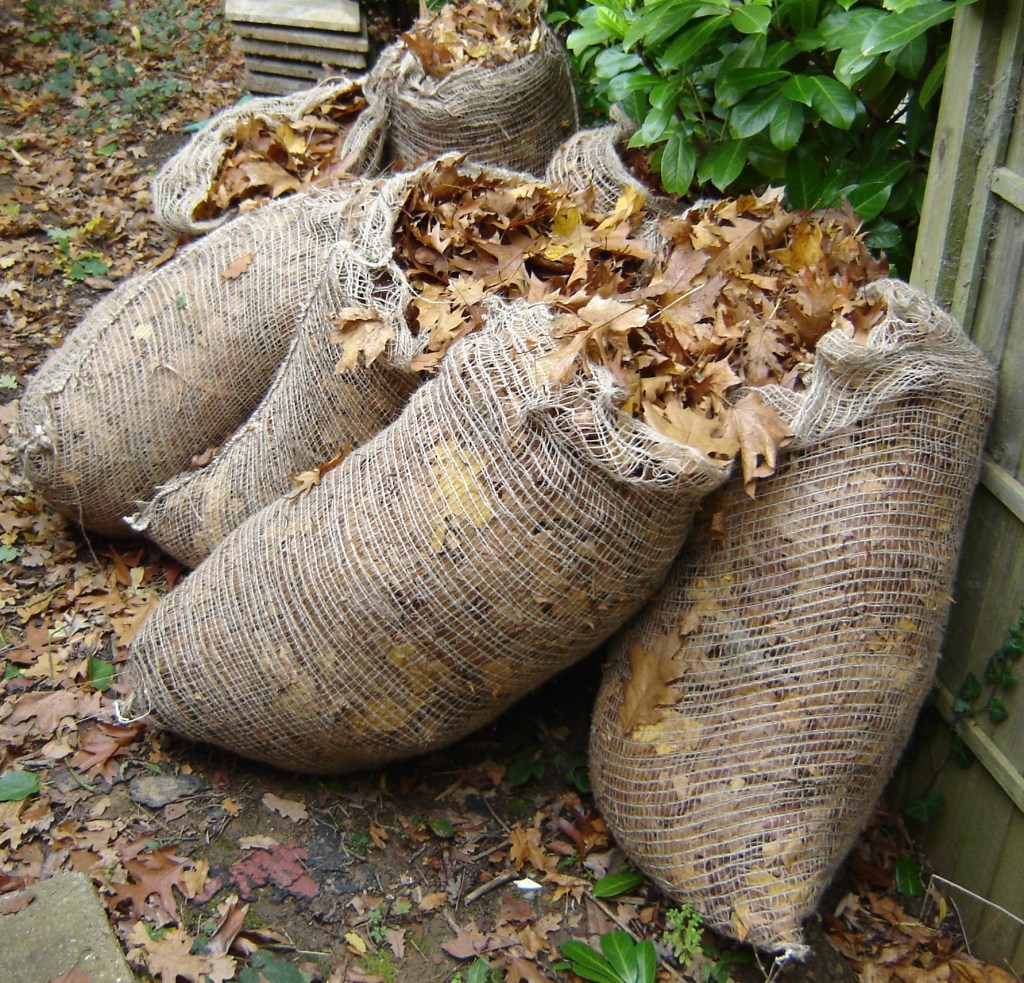
Unless your soil is particularly compacted, your aim should be to cultivate the soil as little as possible. A thick heavy mulch of organic matter, (ideally garden compost straight from your compost bin), locks carbon in the soil, improves microbial life, conserves water, releases nutrients and generally encourages a thriving eco-system. Leaf mould is one of the easiest garden composts to make, made entirely from dead and decaying leaves with low energy input apart from raking. They can be piled in an out-the-way part of the garden, either in their own leaf-mould bin made from chicken wire or in old compost bags tied at the top with a few holes pierced in them, just make sure they are wet to kick-start the decaying process. Unless re-using old plastic sacks, a great addition are woven biodegradable leaf sacks – these can be used a number of ways – stored somewhere cool and dry, and reuse the bags in a couple of years; in a trench in your veggie patch left to decompose adding to the soil; as a weed control left on their side around shrubs or trees; or as an attractive decomposing jute bag sculpture! (also offering shelter for wildlife).

What is climate-friendly gardening? As with every decision in our lives, all actions have reactions, and our gardens are no different. They exist as an arena of interplay with so much more than just ourselves, and changing some old garden routines, or even just bringing more awareness to how we use our gardens can bring a enlivened freshness that only the natural world can provide.

Follow Bovey Heathfield Climate Emergency on Facebook for more detailed monthly advice on Climate friendly gardening. Socially distanced, free site visits offered monthly will be starting up again as soon as lock-down ends – General horticulture-based advice, idea’s, and inspiration. Also keep your eye out for a re-scheduled tree give away in association with Devon Wildlife Trust. Contact Dartmoorgardens@hotmail.com for answers to any of your garden related queries.