Your garden in February – The edge of Spring?

February signals the start, of the end of the Winter, but can often be one of the coldest, wildest times of year. Waterlogged or frozen soil remind us that it is not quite the time for that flurry of activity in the garden which Spring brings. Keep an eye on the weather, as seeds sitting in the damp and cold soil will show a certain reluctance to germinate. Have a dig round and feel the soil to test for readiness – nothing a thick, warming layer of compost from the compost bins won’t help!

If you’re driven inside by the weather, there’s plenty of preparation and hatching of plans to be doing. Home grown potatoes are an easy crop to grow, you can just use large pots or bags if you don’t have space outdoors, and they taste heaps better than in their shop bought form. ‘Chitting’ or sprouting, is the process of encouraging early growth indoors before planting. Growers Organics in Yealampton  have a good on-line selection. Place seed potatoes with their ‘eyes’ uppermost in eggboxes in a cool, frost-free room. They should be ready to plant out just before Easter, when the sprouts are a few cm long. New potatoes can be expensive to buy, and you can’t beat the satisfaction of gently forking through the soil to pull those white globes towards the soil surface.

You can certainly start planting some seeds indoors on window sills or in the greenhouse, and it can be beneficial to stagger for example tomato plants to avoid everything fruiting at once. Seedy Saturday, if not too late reading this is on Saturday 12th 10-12 in the Methodist church, a great way to minimise environmental impact – locally saved and sourced seeds and a lot cheaper than elsewhere.

Keep providing lots of food for birds. They struggle to find normal food in winter. Hazelnuts, walnuts, chopped apples, carrots and spinach can all be offered to squirrels to help them survive the cold weather. Ponds support more endangered freshwater plants and animals than either rivers or lakes – It is debatable as to whether you should carefully make a hole in the ice if it freezes over, the argument being that oxygen diffuses so slowly through the water it  make little difference. Exceptions to this being if you have fish, or if a big build up of rotting leaves and debris in the pond could cause a build up of toxins. Personally, if a long period of winter weather is due, it certainly does no harm to leave a ball or suchlike floating in the water to keep a small hole.
Out in the garden in January

It may not feel so, but we are in the middle of Winter, the mild temperatures; bulbs starting to emerge from the ground; buds starting to form and swell, it all hints towards the edge of Spring. It’s a time of preparation and planning, making the most of fresh days to get outside, and adjusting your gardening activities with the weather. If frosts are predicted, fork over compacted soil, add organic matter, and use the cold to break up and aerate the earth. Heavy winds coming, then its time to check stakes and ties, take some top growth off vulnerable plants, such as roses or buddleias to prevent wind rock or snapping stems. If heavy rain, then give greenhouse glass, pots, and paving slabs a good scrub with an organic washing up liquid to remove algae and let the rain do all the rinsing for you. Any chance to do some jobs now can ease the gradual build of tasks that come over the next months.

If you are lucky enough to have an established rhubarb plant, now is the time to cover the crowns to force some of those unbeatable, tender, bright red fresh stems that you will see outside your local greengrocers. Place a bucket or a pot over the plant to encourage these fresh stems. Ideally you would have a couple of plants to avoid forcing the same crown every year, and within 6 weeks or so, you will be rewarded with the sweetest stems as an early Spring treat!

Pruning apple trees can be a daunting task, encouraging new growth whilst avoiding just giving the tree a ‘haircut’. It can be exasperating to cut back lots of growth and to be greeted with the same next year after a poor crop. Try and stagger the pruning throughout the height of the tree and think of it as more of a thinning process, and remember if you are following a pictorial guide, your tree will rarely look like the perfect example in the picture! Keep an eye on the bits you are cutting out as some make great supports for the lower growing vegetable such as sugar snaps or broad beans.

‘Rewilding’ is a big picture approach to help nature recover and flourish.  In our own gardens, a scaled down version of rewilding can be used, our gardens can become sanctuaries for birds, bees, and other little critters. The answer, some may be disappointed to hear isn’t total neglect – it’s more trying to create as many diverse habitats and floral variety around your garden, seeing your garden through natures eyes. Now is the time of year to reflect on previous cycles, hatch new ideas, plan, and implement  how we can use our garden to the greatest benefit of the environment.

Your greener garden in December

This can feel like a hectic time of year, everything seems to be heading towards Christmas, and there can be so much to squeeze in before the holidays start. However, head outside and there is a real stillness in the garden, and surrounding countryside. The shorter days bring little growth above surface, but below the ground, roots are growing, bringing stability and strength – a wise lesson for us as we head into the dark of the Winter. I love the quiet reflectiveness that these months can bring.

Many plants come into their element at this time of year – the unusual balls of mistletoe, anchored into trees with its sucker-like roots are a real visual treat high-up in the bare branches. There are some beautiful plants for us to enjoy which are essential to keep wildlife fed through the colder months. These are often the most fragrant of plants as they try and lure the diminished numbers of pollinators to their flowers. Lonicera fragrantissima –  not a climber like many other Honeysuckles, but a semi-evergreen bushy shrub with highly fragrant creamy-white, tubular flowers; Viburnum x bodnantense ‘Dawn’ –  an upright deciduous cultivar which bear dense clusters of intensely fragrant flowers on bare branches are just starting to appear; and one of my favourites, Hamamelis or Witch Hazel well known for its beautiful clusters of spidery flowers and its medicinal properties.

The bare branches of winter make it easier to see the birds active in your garden. Some birds travel hundreds of miles to overwinter in the UK such as the Redwing. This bird has distinctive red patches on the underside of the wing, similar in size to a thrush, and in harsh weather may take refuge in our gardens. Keep birds well-fed especially as temperatures drop and leaving your garden that bit untidy and ‘wild’ can encourage those natural food cycles in the garden. Don’t forget to regular clean your feeders, dirty feeders have been linked to a decline in many species by spreading killer diseases.

Its worth giving any over-wintering plants in the greenhouse a blast of fresh air on a milder day to stop them getting used to being pampered, also good for any pests and disease that can build up in the warmer greenhouse. Sweet peas can be sown indoors or in greenhouses this month – these are wonderful flowers to cut for the house (the carbon-footprint of cut flowers can be horrendous, often grown thousands of miles away and flown over in refrigerated airplane holds) – they are also a great flower for summer pollinators. Prune any tall roses or climbers that may be a victim to strong winds and whilst you have secateurs handy, now is a good time to transplant shrubs or perennials – I usually give them a good cut back to reduce stress and a good helping of compost to help settle them into their new home.

Gardening in a changing climate – OCTOBER

We can all feel a shift in the weather at this time of year – The growth cycle is settling and wildlife and plants are responding to the wilder pull of the winter months.  This is a beautiful time of year. There is a richness of colour and abundance of fruits, nuts and berries, attractive not only to us but to all types of wildlife, be sure not to ‘tidy’ them up too early – Native species such crab apple, holly, elder, birch or hawthorn, will be sure of creating natural food supplies for birds through the winter.

There is something profound about the potential within seeds to produce such a variety of forms, shapes, and sizes. Now is a great time of year to be harvesting, saving, storing or maybe even sowing seeds of many types. Trees seeds such as acorns, hazel nuts, holly berries, elder berries and hawthorn nuts (haws), can all be planted straight away into pots of compost or holding beds and watered well – they should sprout in the Spring. Other flowering plants such as poppies, cornflowers, sweet peas, lady’s mantle will be producing an abundance of seeds – save some in an air-tight container but also sprinkle some around to self-germinate and leave some for the birds to enjoy. Don’t forget to do the same for seeds from the edible garden such as beans and tomatoes.  We can get into the habit of just buying new seeds every year when there is an abundance right there – an easy way to tread more lightly on this earth.

Planting bulbs is one of the simple pleasures of Autumn that gives pleasure for many Springs to come. Why not try some more of the beautiful native bulbs we have that are suited to our climate? Chives, (Allium schoenoprasum) look beautiful, taste delicious, heralded as a great ‘companion’ plant and produces amazing dry flowers – loves a sunny spot. For the damper, shadier corners, how about a Loddon Lilly (Leucojum aestivum), an elegant snow-drop-like, damp meadow and woodland edge plant. I keep adding more plants into and beneath my lawn – many bulbs will push up and through turf, native daffodils, anemones, bluebells, star of Bethlehem. Lift the turf, loosen the soil, plant at required depth (usually 3-4 times the height of bulb), and put the turf back -a more beautiful lawn, and beneficial to the wildlife you share your garden with.

In the vegetable garden, it’s the last chances to plant Spring cabbages, garlic & onion sets. Broad beans can also be sown now and may give you an earlier crop next year. Pick last of beans and peas; finish lifting maincrop potatos and lift carrots and beetroots, use anything slightly damaged first and store the rest. Composting is an easy way to turn what some view as waste into a freely available rich soil improver which encourages healthy plants, conserves moisture, locks carbon into the soil, improves soil structure and biodiversity and also reduces pressure on local services, fuel costs for collection, the list goes on and on! It’s an easy, straight forward activity but is also a fascinating subject once you start delving into the micro-worlds within! On Wednesday 13th October 7PM, CEBH are hosting a talk on composting from Nicky Scott. You can join us in person or on Zoom. (Contact cebh@boveytracey.gov.uk). I tend to empty out my compost bins now before anything settles inside for the  Winter months, and spread it as a thick mulch wherever needs it most – It is better to give enough to a small area rather than spread too thinly.

E.F.G – Earth Friendly Gardening in SEPTEMBER

E.F.G – Earth Friendly Gardening

September can feel like a turning point in the yearly cycle. Wilder winds blowing in to remind us that all is slowing down but there can still be real warmth in the air to enjoy. Gardens hint at the transition from late Summer into Autumn, the first reddish tints of foliage and a pull towards the quieter months as fruits and berries swell, nuts form and a chance to give thanks and enjoy the bountiful harvests from the productive garden.

In the ornamental garden, it can be tempting to clear anything that starts to look ‘messy’. One option which I encourage people to try is to leave everything to die back naturally, composting itself and feeding the soil. This year I will be trying a more balanced approach – some areas I may cut back where too congested, mulching well with home-made compost, and let the creatures of the soil pull all that goodness down into the ground over the winter months. I leave as many seed-heads as I can and ensuring there are lots of safe places for wildlife to hibernate. As plant energy sinks down into the roots, this is a great time to divide or move perennials – clump forming plants can be split by a sharp spade & potted up or moved elsewhere. There is still lots of show-stopping colour at this time of year – Sedums; Rudbeckias; Clematis Viticella and of course ornamental grasses are a late treat for us and those that share our garden to enjoy.

According to Keats, Autumn is the season of mists and mellow fruitfulness. Its also the real harvest time, a time of celebration of Earths abundance and hopefully our own plentiful crops. Any vegetable ‘calendar’ will be full of the ‘harvest’ symbol during this month – pickle; dry; preserve; bottle; chutney. These can feel like disappearing arts but there is nothing more encouraging than sight of shelves laden with full bottles & jars, strings of onions or trays of apples. Hopefully we’re not at a stage where we need these to survive the winter months, but it can certainly encourage us to eat more seasonally. Health experts and chefs alike are now quick to discuss the benefits to us of eating different foods at certain times of the year. If you don’t have a productive garden, it only seems common sense to carry such ethics over to grocery shopping. Local, smaller grocery stores often have a list of what is in season and what is coming from a farm up the road rather than thousands of miles away.

You can sow green manures as space appears on any vegetable beds – these are living plants that capture renewable sunlight energy and turn it into soil-enriching organic matter. However you don’t need a garden to grow microgreens – a warm spot inside is all they require. Often flying the flag as a ‘superfood’, this eco-friendly food can be raised in days and eaten all year round. They can be grown in trays or tiered sprouters.  Ensure you get your seeds from organic sources and rinse thoroughly before putting them to sprout. Seeds like fenugreek and mung beans can be enjoyed in salads, stir-fries or sandwiches – it’s as easy and simple as that! Gardening is not always the ‘green’ activity it is touted as. Any queries regarding how to use your garden in a more earth friendly way, just email me on dartmoorgardens@hotmail.com.

Planet-friendly gardening in July

GREEN GARDENING IN JULY

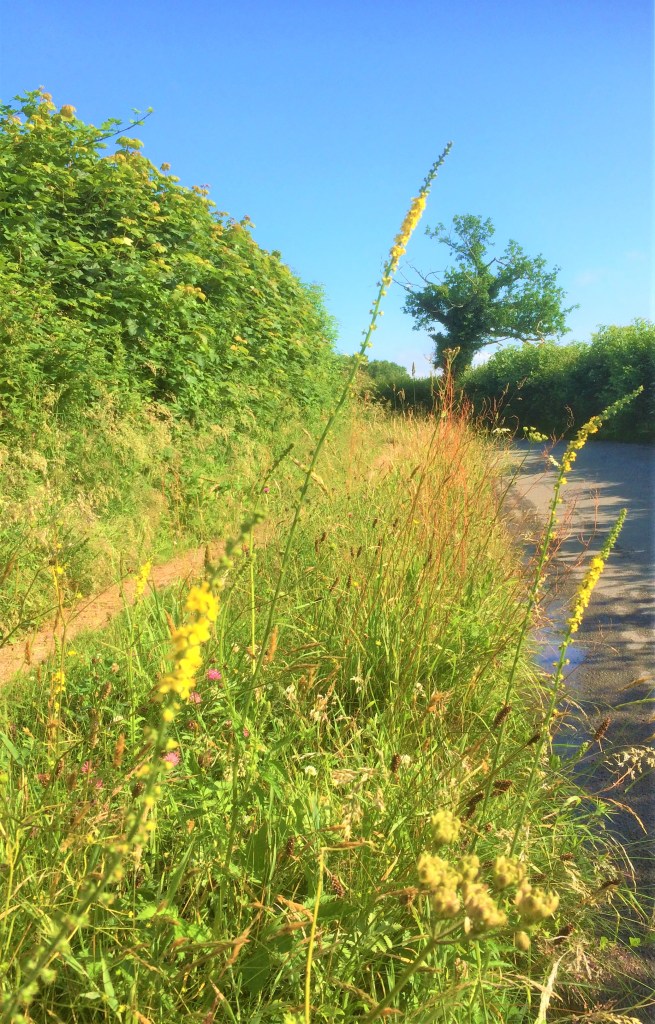
It is the height of Summer, temperatures are rising, and plants are celebrating their own beauty in abundance of flowers, colours, and forms. As I wonder round the lanes, I love to note the wild edges creeping in, the tendrils of the brambles making a low grab for your ankles; the clouds of meadowsweet flopping under their own billowing flower heads; the spires of agrimony amongst the bobbing grass seed-heads. Chapple lane has some beautiful examples of how nature can look at its best untamed, something which is hard to recreate ourselves. The local Bovey Tracey Wildflower group are doing a great job of this, and all the hard work behind the scenes is now paying off with verges that reflect their efforts with huge benefits for our local wildlife as well as our own enjoyment.

In our own gardens, borders are fit to bursting with colour, and long Summer evenings give us all plenty of opportunity to sit and enjoy our outdoor space. For intensity of colour and perfume, roses and lavender are hard to beat right now, (a classic combination), and it is a perfect time to wander round the garden with a notebook to see what is working and what may need changing. I always keep a pair of secateurs handy to stay on top of dead-heading to encourage more flowers. Just cut back to a bud in a leaf axil lower down the stem. There are always exceptions, such as roses that produce attractive hips which are enjoyed by the birds in Autumn. Why not take some semi-ripe cuttings? – showy hydrangeas are easily propagated at this time of year. Just take a non-flowering shoot 10cm long just above a bud and remove lower leaves. Put in a shady corner, cover with a polythene bag and lightly water every few days. In about 4 weeks the cutting should have rooted, and you can pot up to plant out next Spring.

Keep an eye on any seed heads of early spring plants such as cowslips and primroses which will be ripening about now. Spread them out on paper and sort through them, discarding any that do not look perfectly formed. Let them dry thoroughly before storing them in labelled envelopes for sowing in Autumn or Spring. Growing from seed is a rewarding and eco-friendly way to raise plants and a quick way to reduce ‘plant miles’. Don’t be disheartened by failures, experiment and see what works best, do a bit of research on the plant and mimic how the seeds would germinate in the wild. The most important things are to use a fine compost to sow the seeds, and similarly a fine rose on a watering can to water.

In the productive garden, there is more cropping than planting to be done – most edibles taste better when younger. Harvest garlic and onions when the leaves begin to turn yellow and flop. Lift an early potato to see if ready to harvest. Stop tomato plants (pinch out the growing tip), when they reach 4 trusses so they can put all their energy in ripening the fruit they already have. Likewise with climbing beans, stop them when they reach the top of their supports and pick every couple of days. If strawberries have finished, drastically go over the whole plant with a pair of shears and remove any old straw, new fresh healthy foliage will soon emerge. Prune currant and gooseberry bushes – think, open ‘goblet’ shapes, remove any crossing branches, approx. 1/3 of old wood, this allows more air to circulate and lets more light to ripen fruits. You can still sow peas, beans, beetroot, lettuce and carrots till the end of this month,

Every day seems to be marked as an ‘International Day of Something’, but “World Nature Conservation day” on the 28th July, seems especially important to us all. This day is to remind humankind about the importance of nature and the need to protect it. The day is marked globally to spread awareness about the best practices to protect our natural resources. Our gardens and the way we interact with them is an easy, attainable place to start. If you need any ideas or inspiration how to do this contact dartmoorgardens@hotmail.com or cebh@boveytracey.gov.uk, take advantage of FREE monthly garden visits or attend the next Climate Emergency Bovey Heathfield public meeting. You can browse previous monthly ideas at www.dartmoorgardens.org. Don’t miss the local Friends of Mill Marsh park event, tree trails, kids arts & crafts on July 24th 2-4 in the park, a great opportunity to learn more about some of the amazing wildlife we have on our doorstep.

The edge of Summer

GREENER GARDENING IN JUNE

What a difference a few weeks can make, the end of those sneaky frosts, average temperatures creeping higher, the garden and its inhabitants feeling the power of the Sun – it feels like the whole garden is transitioning and moving to a new phase. Ornamental borders are starting to look at their best, foliage still has that zesty freshness and flower buds on the edge of bursting forth. As we edge into Summer, this is the season of flowers, nature celebrating its own beauty with its vast range of floral colours, shapes, and scents.

Join in with the celebrations on hedgerow walks, campion, dog roses, red & white dead- nettles scattered amongst the thickets. It is difficult to create such a natural looking, pastel tapestry in our own gardens. Often the answer is just to back off from our attempts to control and see what happens. Woodland walks can be a cool escape from the hotter days, woodland trees soon in full leaf keeping the ground cool and surprisingly damp. Enjoy the woodland glades, fronds of bracken, flowering brambles, and magenta foxgloves. I often receive a collective, rebellious groan as I suggest passing through these areas of intense secret activity in silence, but the summer woods ‘timelessness’ atmosphere is undeniable.

Back at home in our gardens, unwanted plants will compete for light and nutrients so the best way to stay on top of weeds is to regularly hoe the seedlings, using a sharp hoe to sever the young weeds just below the surface level – on a hot day you can just leave them to shrivel up on the ground. Bigger weeds forked out by hand can be left on the surface of the soil as a temporary mulch or added as a ‘green’ to the compost. Once you start to get excited about the appearance of certain ‘weeds’, it can change your whole relationship with them. Some of the more persistent, tougher weeds can be left submerged in a bucket of water for 4-6 weeks before being added to the compost.  

A great plant to tuck away in a difficult corner is comfrey, an organic gardeners best friend. Its leaves are rich with all the essential nutrients. A reliable variety is ‘Bocking 14’, attractive purple flowers for us and beloved by bees, it can eliminate the need to buy expensive fertilisers. Harvest the hairy leaves and pack them into a water-tight container, ideally with a brick on the top to weigh them down, a lid will reduce any stagnant smells. Over a number of weeks, the leaves will break down and release a nutrient rich liquid. This can used, diluted at 1:10 with water for a rich feed for hungry plants. Top up with fresh comfrey leaves and start again.

In the productive garden, I use plastic bottles cut in half for watering the fussy plants. Cut the end off a bottle and sink into the ground, neck first, sometimes a small stick is necessary to keep them up. You can then ensure that you are not wasting water by splashing it away from roots and washing away soil. Also by topping to the same point every time you can ensure the tomatoes are getting the same amount of water regularly to prevent skins from splitting. Tomatoes are one of the few edibles that benefit from the regular, smaller amounts of water, rather than a once weekly decent soak.

The affect and influence of money runs deep in our culture and it is an area where we have direct control and responsibility not only where it is earnt, but also where we spend it. This can be a very powerful message. Small decisions, from using harvested hazel supports for our plants instead of bought plastic canes; to making our own fertilisers versus buying carbon heavy, wildlife destroying chemicals; to shopping locally, can all perpetuate what kind of world we want to live in.

MAY – Greener gardening

So much for April showers, we have had now one of the driest Aprils on record in nearly 100 years. The sun is growing stronger, but we have been experiencing some really cold nights so don’t get too carried away planting out young seedlings – it’s hard to not do so when everything is elbowing each other for space in the greenhouse. Just harden off anything used to the cosy embrace of the indoors or glasshouse by gradually exposing them to the outdoor temperatures.

Birdsong is in full swing and as supplies of native nuts and seeds dwindle, make sure you keep these wonderful garden visitors well fed and watered. The local sparrow population in my garden are doing a great job in keeping the emerging aphid population down so I will do what l can to keep these pest control experts sharing my garden. May can be a hectic month but there are many ways to save yourself time so you can spend more of it admiring the plants and wildlife as you eat your fresh salad leaf salad sprinkled with the bright star shaped flowers of your borage flowers.

Mulch, mulch, mulch. Save time weeding and watering. There are many different types of mulch from seaweed to straw, grass clippings to bark chip. Each have different merits, but avoid peat based manure/ compost. Best is home-made compost with the smallest environmental footprint, or whatever is closes at hand for you, and unless the ground is really compacted it can just be left in a thick layer on top of the beds. Mulching feeds all sort of fungi as it breaks down and locks carbon in into the soil – it’s benefits really can’t be overstated, aim for a depth of at least 5cm. It’s a great way to attract more worms which will thrive in the cool, dark conditions.

There are some beautiful plants to enjoy this time of year. There are some beautiful, head-turning  wisterias in Bovey, lovingly trained on walls. These plants are real ‘doers’ – loved by pollinators; a musky sweet scent from the dripping pea-like flowers; often used a shelter by birds and insects. Their twining stems can require a little encouragement to train them in a manageable way but if you have the space and have a host tree or hedge you can send them spiralling upwards and they’ll reward their freedom with a few less blooms, but a real rambley wildlife habitat for all sorts of creatures. One of my children always used to call them ‘Misteria’s’ which I think is a much more apt name for these symbolic plants.

Elsewhere in the garden, I’m ensuring my water-butts are clean and leak-free to collect this precious commodity – planning where I can add some more water storage. I’m directly sowing French beans and sugar snap beans in my vegetable garden – seedlings of these can be damaged by slugs so after sowing you can cover with half a plastic bottle to act as a mini-cloche and slug/snail deterrent. Straw will be tucked under strawberries in next week or 2, this will help conserve the moisture and also help them from being spoiled by rain-splashed soil and slugs. May day is an important ‘workers holiday’ but its more ancient roots stem from the festival of Beltain, one of the great fire festivals when bonfires were lit on hill tops and communities gathered around all night to see the summer in. This time of year, all life is on the move, and it’s a time for collective thinking of how to influence the world around us in subtle but profound ways……. So why not start by planting a tree or some wild seeds! The Bovey & Heathfield Climate Emergency group are giving away trees and seeds in partnership with Devon Wildlife trust on Sat May 22nd from 9.30 @ the new Community Centre in Bovey – Please wear facemasks and observe social distancing. Or contact dartmoorgardens@hotmail.com or cebh@boveytracey.gov.uk with any garden related queries

APRIL 2021. Climate friendly gardening

We have enjoyed some wonderful warm days already this year and the late spring flowers are everywhere to be seen. Yellow dominates, its brightness attracting early pollinators with the lower light levels – wands of forsythia in peoples gardens festooned with its cups of an almost offensive brightness; star-like celandines littering verges and wood-land edges; you may catch the last of the wild daffodils at Dunsford nature reserve, one of England’s largest gathering of these nectar rich plants. It was only 50 years ago that daffodils here were becoming a rare sight due to picking by unthinking visitors but changes in legislation and work by Devon Wildlife Trust now ensure this a spectacle enjoyed by humans and a boon for wildlife.

It is easy to get carried away in the garden but keep the horticultural fleece close this month. Seed sowing can start in earnest – a sunnyish window-sill will suffice, although a greenhouse is an investment that comes highly recommended. I love to escape into that warm, dry shelter; hearing the rain drum down on the roof wishing I had more space as I cram more seeds onto every horizontal surface. A visiting mouse has been causing havoc to my efforts but now with sprigs of holly covering the trays and an additional protection of cloches, seeds are well on their way. A long-time gardener friend recommended hanging shelves as an effective ways to deter these furry visitors! Crops like Lettuce germinate quickly even in the cooler temperatures and can be planted out anytime. The tight-heads of Cos lettuce can be cropped a few leaves at a time from the outer layers. If you are feeding a family, I love the ‘Red Iceberg’, lovely contrasting red and white leaves and stands well for a long time.  As with a lot of these quicker germinating vegetables, the trick is to sow every couple of weeks – A glut of lettuce, and lettuce soup can be a hard sell to my kids!

Raised beds can be a great option for growing fruit, vegetable or how about herbs? Herbs will do especially well in a sunny spot with the extra drainage from the raised soil level. It can be an effective  way of losing some old rubble in your garden by building raised beds, utilising the rubble at the base. I love to try and get some changes in level to add some interest to a flat plot. The beds can be made from various materials – wood, stone or bricks.  There are a lot of recycled plastic options on the market now, with pros and cons of each choice.  Herb beds are ideally situated as near to the kitchen as possible and can be some of the most useful of all eco- garden plants. For visual appeal and a favourite with the bees is Borage, a reliable self-seeder that renews itself year-on-year. Chives are an early starter and have already been harvested a couple of times raw in salads – I’ll leave some for their lovely nectar rich flowers and cut them to ground level when they’ve gone to seed for a continuous crop through to till early Autumn.

As new growth appears on fruit trees and shrubs, it is a good time to give them a feed. Home-produced compost is ideal but if not loose manure from a local farm is better than pre-plastic-packed manure from garden centres. The organic fertilisers from chicken or sheep manure I find effective, just sprinkle liberally round base of plants and water them well if no rain due. I often use organic insect ‘Frass’, very apt in this climate of ‘vaccines’, a by-product of meal-worm castings, it encourages plants to trigger their natural immunity to insect attacks as well being chock-full of nutrients. It is worth noting that improving soil has an immediate benefit of locking up and storing atmospheric carbon thus helping reduce build-up of greenhouse gases.

Your garden in December

This time of year can produce a real juxtaposition of days – Crisp, clear air and striking blue skies, a stillness in the cold, carrying sounds and scents for miles. Waking up the next day to face whipping rains, shoulder hunching winds and a general muddiness to the rotting leaves gathering. It can feel like the ground will never dry out and worries of plants needing watering seem an age ago.

The nature of gardening means we are often in tune with the weather, noticing extending growing seasons and observing how various plants are coping with changes. We have experienced an increased frequency of extreme weather conditions and long-term projections suggest that wetter winters and drier summers is something we should prepare for. So, whilst idly flicking through plant catalogues with your feet up, put plant ‘resilience’ at the forefront of any new planting choices. There is no point plant planting a tree that, in 15 years time is struggling with its roots unable to breath, bathing in soggy soil during the winter before baking in hard, dry soil a few months later. There are still lots of wonderful choices that deliver aesthetically as well as providing that resilience. This time of year, Cornus, or dogwoods, have striking, vivid stem colour, a real joy under that low winter sun. A good option for shady spots, Viburnum opulus ‘Roseum’ is a stunning bushy deciduous shrub that can tolerate wet soils following a rainstorm. Fragrant white or pink flowers throughout the spring and summer are followed by red, blue or black berries coupled with rich red leaves in the autumn.

For many of us, the luxury of letting shrubs grow without some action can soon mean even getting into the garden can become a challenge. Now is a great time for some selective pruning – you can often see the structure better; the plants tend to be mainly dormant and birds have yet start nest building. As always, it is worth checking what you may be disturbing as who knows what wonders may be lurking in that thicket of stems. It is often not clear how much a hard cut-back will affect the ‘victim’, but plants are mostly tougher than you think.  Give them a good feed, mulch and mumbled apologies after and they will hopefully reward you with fresh invigorated growth next year. If you are unsure, you can cut back in stages – a ‘renewal’ prune works well for many shrubs, cutting a third of the oldest stems to the ground. A garden ‘journal’ or notepad is great to take notes and an invaluable way to learn how plants are responding to your ‘attentions’.

Birds can look all puffed up as they try to stay warm at this time of year but that does not mean they are all full up and have plenty of food! There is no doubt that feeding the birds increases Winter survivorship. An organic garden should provide rich pickings for all shapes and sizes of visitors – berries, seedheads, slugs and snails, nectar and pollen. If you can manage to have something in flower most months that is great for the wider garden population – Mahonias, cotoneasters or the winter flowering Clematis armandii ‘Apple Blossom’ are invaluable right now.

With this more reflective time of year, it may be time to think differently about your garden and view it as a dynamic, living eco-system. Nature is a wise teacher, and by observing its patterns and working in harmony with it, we can minimise any negative effects on the world around us.