E.F.G – Earth Friendly Gardening
September can feel like a turning point in the yearly cycle. Wilder winds blowing in to remind us that all is slowing down but there can still be real warmth in the air to enjoy. Gardens hint at the transition from late Summer into Autumn, the first reddish tints of foliage and a pull towards the quieter months as fruits and berries swell, nuts form and a chance to give thanks and enjoy the bountiful harvests from the productive garden.
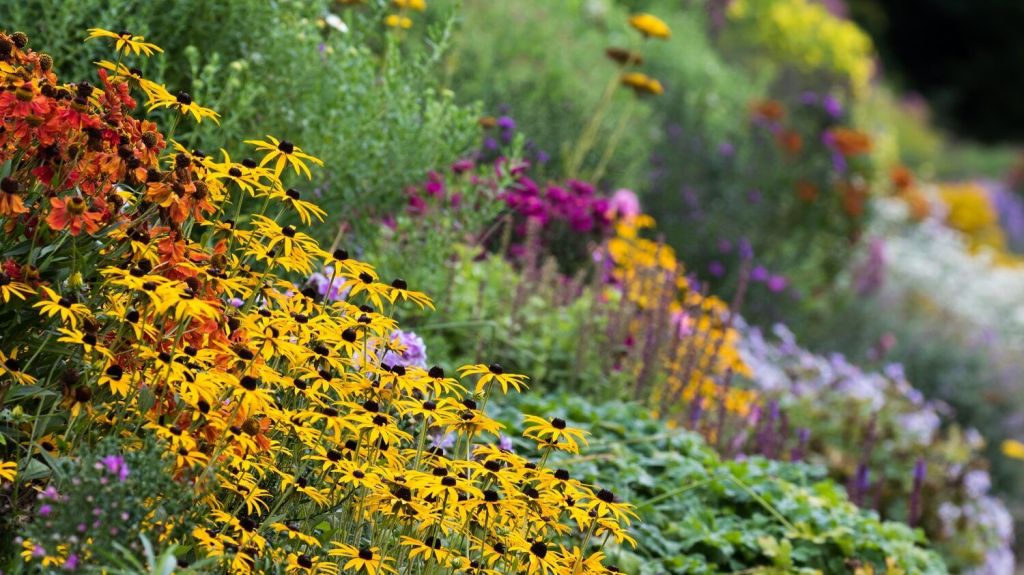
In the ornamental garden, it can be tempting to clear anything that starts to look ‘messy’. One option which I encourage people to try is to leave everything to die back naturally, composting itself and feeding the soil. This year I will be trying a more balanced approach – some areas I may cut back where too congested, mulching well with home-made compost, and let the creatures of the soil pull all that goodness down into the ground over the winter months. I leave as many seed-heads as I can and ensuring there are lots of safe places for wildlife to hibernate. As plant energy sinks down into the roots, this is a great time to divide or move perennials – clump forming plants can be split by a sharp spade & potted up or moved elsewhere. There is still lots of show-stopping colour at this time of year – Sedums; Rudbeckias; Clematis Viticella and of course ornamental grasses are a late treat for us and those that share our garden to enjoy.
According to Keats, Autumn is the season of mists and mellow fruitfulness. Its also the real harvest time, a time of celebration of Earths abundance and hopefully our own plentiful crops. Any vegetable ‘calendar’ will be full of the ‘harvest’ symbol during this month – pickle; dry; preserve; bottle; chutney. These can feel like disappearing arts but there is nothing more encouraging than sight of shelves laden with full bottles & jars, strings of onions or trays of apples. Hopefully we’re not at a stage where we need these to survive the winter months, but it can certainly encourage us to eat more seasonally. Health experts and chefs alike are now quick to discuss the benefits to us of eating different foods at certain times of the year. If you don’t have a productive garden, it only seems common sense to carry such ethics over to grocery shopping. Local, smaller grocery stores often have a list of what is in season and what is coming from a farm up the road rather than thousands of miles away.
You can sow green manures as space appears on any vegetable beds – these are living plants that capture renewable sunlight energy and turn it into soil-enriching organic matter. However you don’t need a garden to grow microgreens – a warm spot inside is all they require. Often flying the flag as a ‘superfood’, this eco-friendly food can be raised in days and eaten all year round. They can be grown in trays or tiered sprouters. Ensure you get your seeds from organic sources and rinse thoroughly before putting them to sprout. Seeds like fenugreek and mung beans can be enjoyed in salads, stir-fries or sandwiches – it’s as easy and simple as that! Gardening is not always the ‘green’ activity it is touted as. Any queries regarding how to use your garden in a more earth friendly way, just email me on dartmoorgardens@hotmail.com.
 Dartmoor Gardens