Climate-friendly gardening in November.
As we enter the transition from the Harvest months of Autumn to the quieter, darker months of Winter, the pace and urgency of work in the garden will slow down. Animals and plants respond in different ways to the drop in temperature – The toads may be joining the snails in the damp shelter beneath your shed, whereas the ivy, cladding the wobbly fence panel may be just erupting into a mass of pungent blooms. This successful and widespread plant evokes mixed feelings. Some see it as a sombre, dark, troublesome beast, but in fact it is one of the most important plants around. Dense foliage offers year-round shelter and its late flowers and berries offer food at a scarce time of year. Recent studies concluded over 140 insects and 17 bird types feed on ivy. For us humans to enjoy, there are ivies for every garden location – shade tolerant; ground cover; evergreen; brightly variegated; topiary trained; rapid growing climbers, dense shrub forming types. The thought of letting ivy grow up your house may fill some with dread, but its benefits on suitable surfaces is making this practise increasingly common – their ecosystem qualities keep houses cooler in summer and warmer in winter as well as improving air quality by trapping particulates.
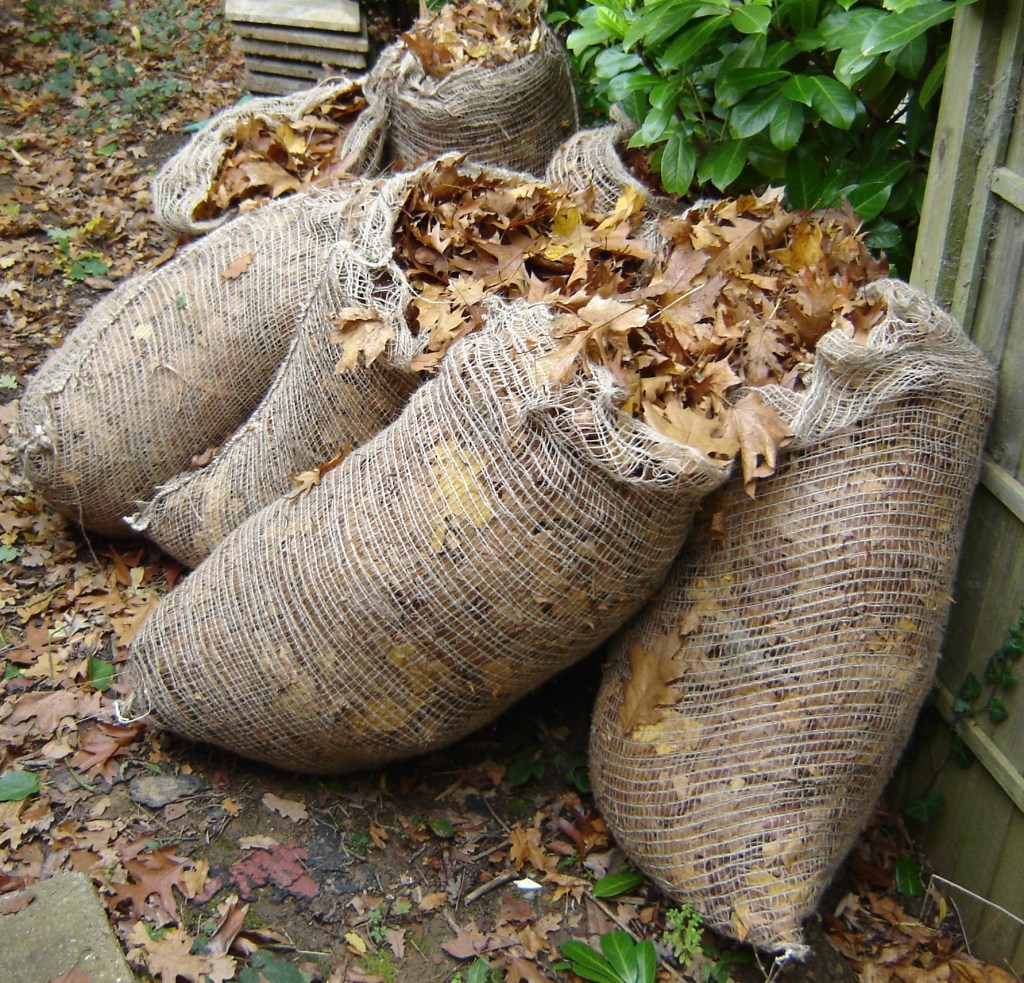
Unless your soil is particularly compacted, your aim should be to cultivate the soil as little as possible. A thick heavy mulch of organic matter, (ideally garden compost straight from your compost bin), locks carbon in the soil, improves microbial life, conserves water, releases nutrients and generally encourages a thriving eco-system. Leaf mould is one of the easiest garden composts to make, made entirely from dead and decaying leaves with low energy input apart from raking. They can be piled in an out-the-way part of the garden, either in their own leaf-mould bin made from chicken wire or in old compost bags tied at the top with a few holes pierced in them, just make sure they are wet to kick-start the decaying process. Unless re-using old plastic sacks, a great addition are woven biodegradable leaf sacks – these can be used a number of ways – stored somewhere cool and dry, and reuse the bags in a couple of years; in a trench in your veggie patch left to decompose adding to the soil; as a weed control left on their side around shrubs or trees; or as an attractive decomposing jute bag sculpture! (also offering shelter for wildlife).
What is climate-friendly gardening? As with every decision in our lives, all actions have reactions, and our gardens are no different. They exist as an arena of interplay with so much more than just ourselves, and changing some old garden routines, or even just bringing more awareness to how we use our gardens can bring a enlivened freshness that only the natural world can provide.
Follow Bovey Heathfield Climate Emergency on Facebook for more detailed monthly advice on Climate friendly gardening. Socially distanced, free site visits offered monthly will be starting up again as soon as lock-down ends – General horticulture-based advice, idea’s, and inspiration. Also keep your eye out for a re-scheduled tree give away in association with Devon Wildlife Trust. Contact Dartmoorgardens@hotmail.com for answers to any of your garden related queries.
 Dartmoor Gardens